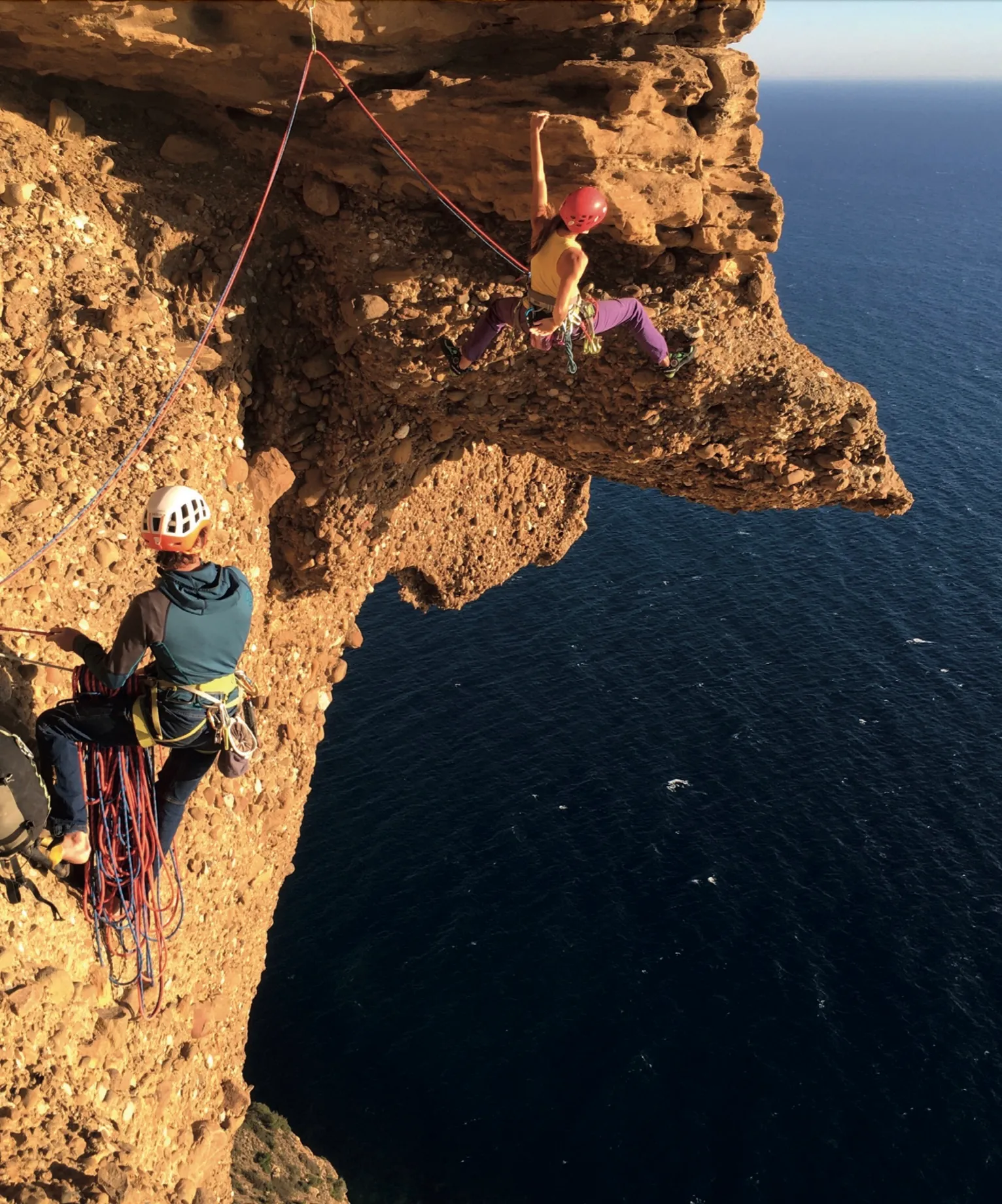
Can’t resist the urge to climb, but wouldn’t say no to a quick dip in the sea either? Then climbing in the Calanques is for you!
Stretching from Marseille to La Ciotat, this limestone massif is one of France’s most iconic climbing destinations. Legendary multi-pitch routes, deep-water soloing above the blue waters of the Mediterranean, red sandstone at Cap Canaille… Everything you need for a great climbing trip.
With 20 km of coastline and 28 calanques, you’re bound to find something that suits you. And to help you climb at some of the best spots, you can find VTOPO climbing guidebooks for the Calanques and Cap Canaille in the Whympr app. You’ll have all the essential information right on your phone.
So, ready to head to Provence to climb, swim and drink rosé?
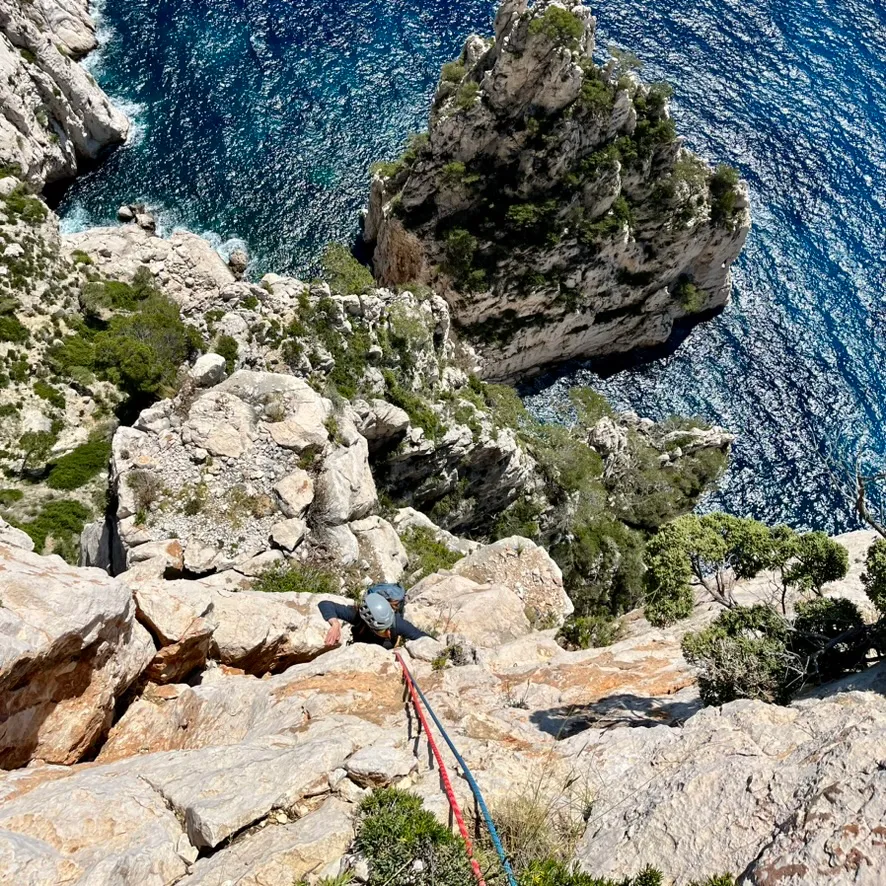
A historic climbing area worth protecting
Some of the greatest climbers have passed through here: the fascination with the Calanques is nothing new.
The proximity to Marseille and the quality of the rock attracted climbers from an early stage. As early as the 19th century, La Grande Candelle, located in the heart of the massif, was climbed. In 1875, the French Alpine Club (Club Alpin Français) created a Provence section.
By the mid-20th century, it was the turn of Gaston Rébuffat and the Livanos couple to open numerous routes that have since become classics in the Calanques. The famous photograph of Rébuffat straddling the gap on the Arête de Marseille helped popularise the routes in the area.
Meanwhile, Georges Livanos opened around 500 routes in the Calanques, usually climbing with his wife Sonia.
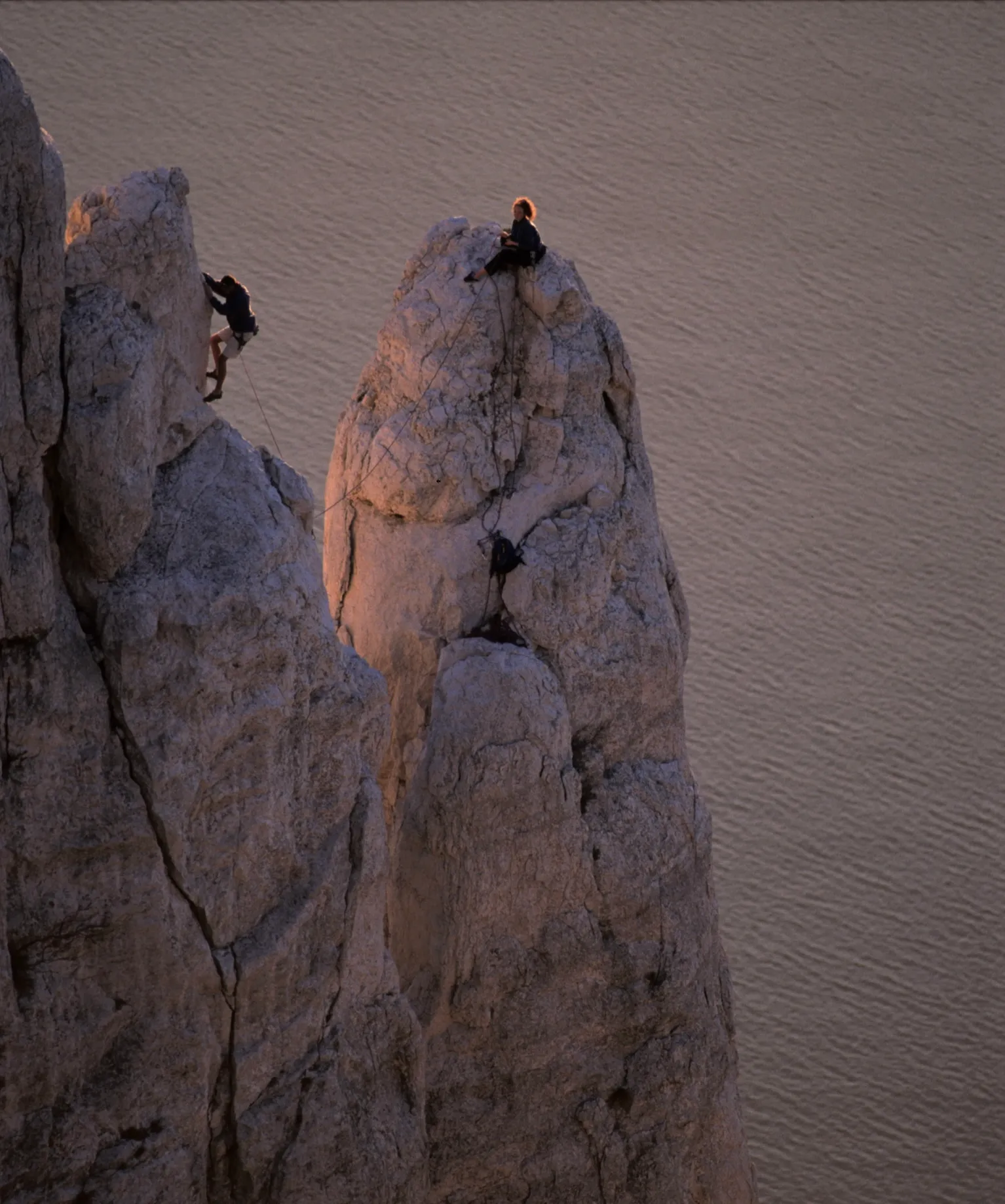
Times changed and climbing standards evolved. In 1987, Jérôme Rochelle opened the first 8a in the Calanques.
The Calanques were also the scene of a serious accident involving Patrick Edlinger. Following an 18-metre fall while climbing a 7b, he stepped away from high-level climbing.
Climbing at Cap Canaille
Climbing at Cap Canaille is a more recent development.
The first multi-pitch route dates back to 1951, opened by Dr Albert. New routes continued to appear in the 1970s, including Délation in the Ombre du Néant sector.
Today, a large number of major routes have been established on Cap Canaille’s distinctive red sandstone, with particular attention paid to grades and protection, giving the climbing a distinctly alpine feel.
Climbing above the sea
The massif is also famous for its traverses above the water. With 20 km of cliffs overlooking the Mediterranean, sea-level traverses have become a Marseille tradition — along with pastis, of course.
Being so close to the water adds to the sense of exposure and means you need to pay close attention to marine weather conditions. After all, getting your climbing shoes soaked by crashing waves isn’t exactly the most comfortable situation.
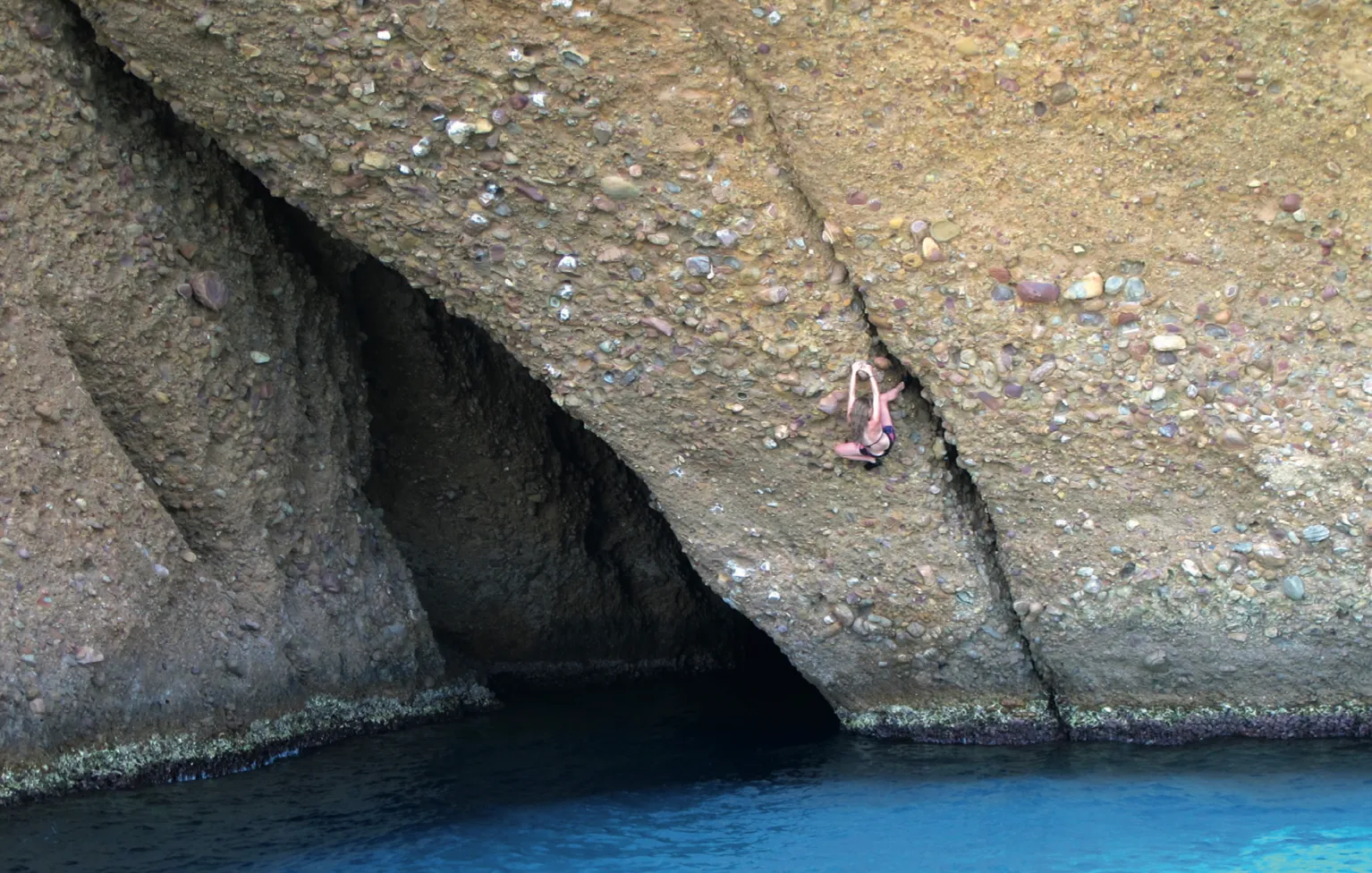
And finally, it’s impossible to talk about climbing in the Calanques without mentioning deep-water soloing (psicobloc).
Minimalist, to say the least, deep-water soloing involves climbing with no equipment other than your climbing shoes. Instead of landing on a crash pad, you simply jump into the water.
The warm Mediterranean waters are perfect for this kind of climbing, and there are numerous deep-water soloing spots throughout the Calanques.
One of the earliest traverses in the area is probably the Gary Hemming, opened in 1967 by Hemming, François Guillot, Jean-Max Bourgeois and Lothar Mausch. A 6b with 200 m of climbing in Calanque d’En Vau awaits on sunny days.
If you want to learn more about this combination of swimming and climbing, check out our dedicated article on deep-water soloing.
A rich and fragile natural environment
The Calanques are one of France’s 11 national parks.
Highly protected, the park regulates visitor access and activities in order to preserve its exceptional natural environment. Before heading out climbing, make sure you check the regulations to avoid any misunderstandings — and hefty fines.
Bivouacking and fires are prohibited. You may remember that in 2016, a wildfire devastated more than 300 hectares.
Make sure you also check which car parks are accessible before setting off, unless you fancy discovering a surprise three-hour approach hike.
When it comes to wildlife and plants, walking through scree areas is prohibited in order to protect fragile ecosystems, and picking flowers is strictly forbidden.
As is often the case at climbing crags, certain routes may be closed during nesting season to protect local bird species.
Important: there are no water sources inside the park. Two litres of water will certainly not be too much, especially if you want to avoid licking rocks to quench your thirst — an old technique that works surprisingly well in the desert.
The peregrine falcon chicks need some peace and quiet.
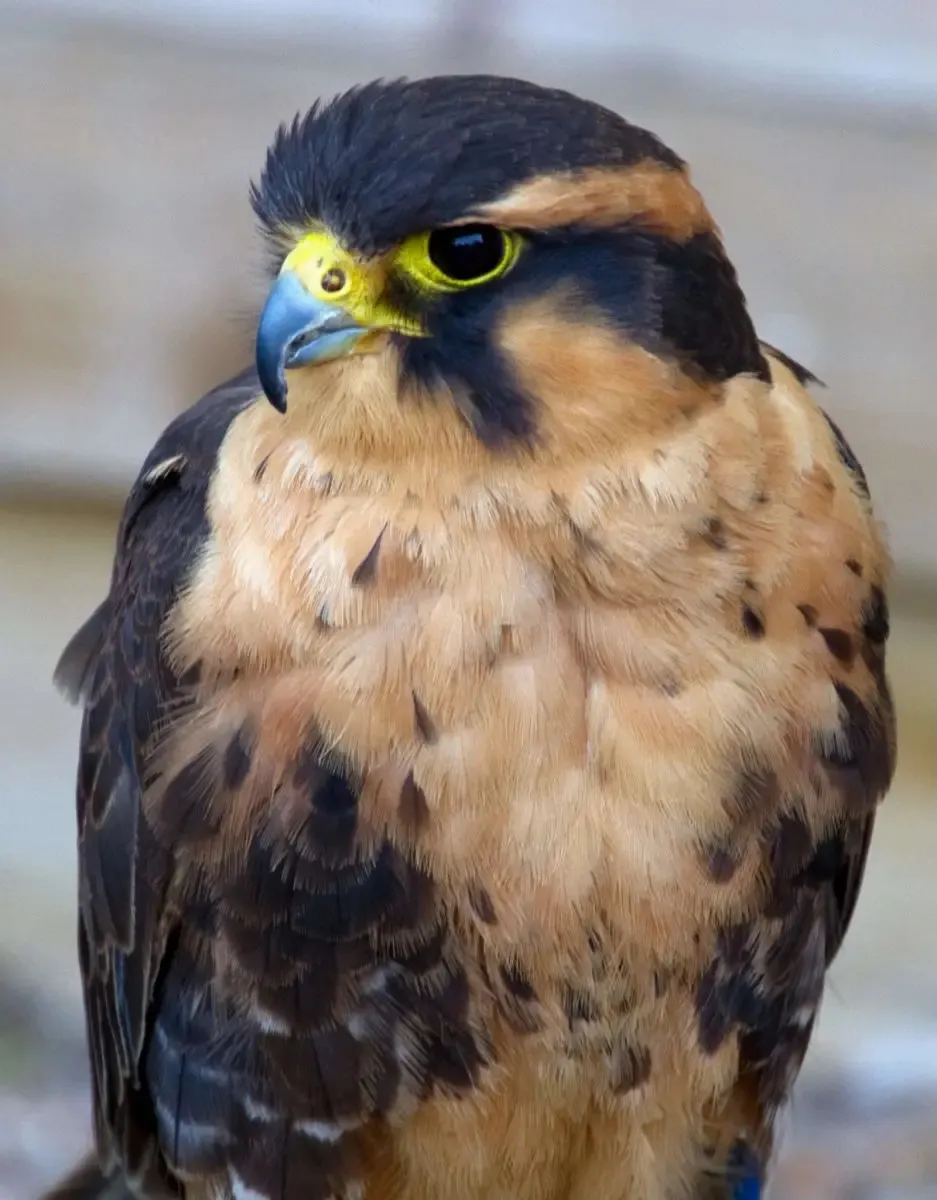
Of the 80 bird species found here, 67 are nationally protected, including the Bonelli’s eagle and peregrine falcon. You may also encounter various species of bats, reptiles and amphibians, as well as a rich marine ecosystem.
When it comes to plant life, walking across the limestone scree is prohibited because these areas are home to the Provence sandwort, a rare flower endemic to the park.
You can find the full set of regulations on the Calanques National Park website.
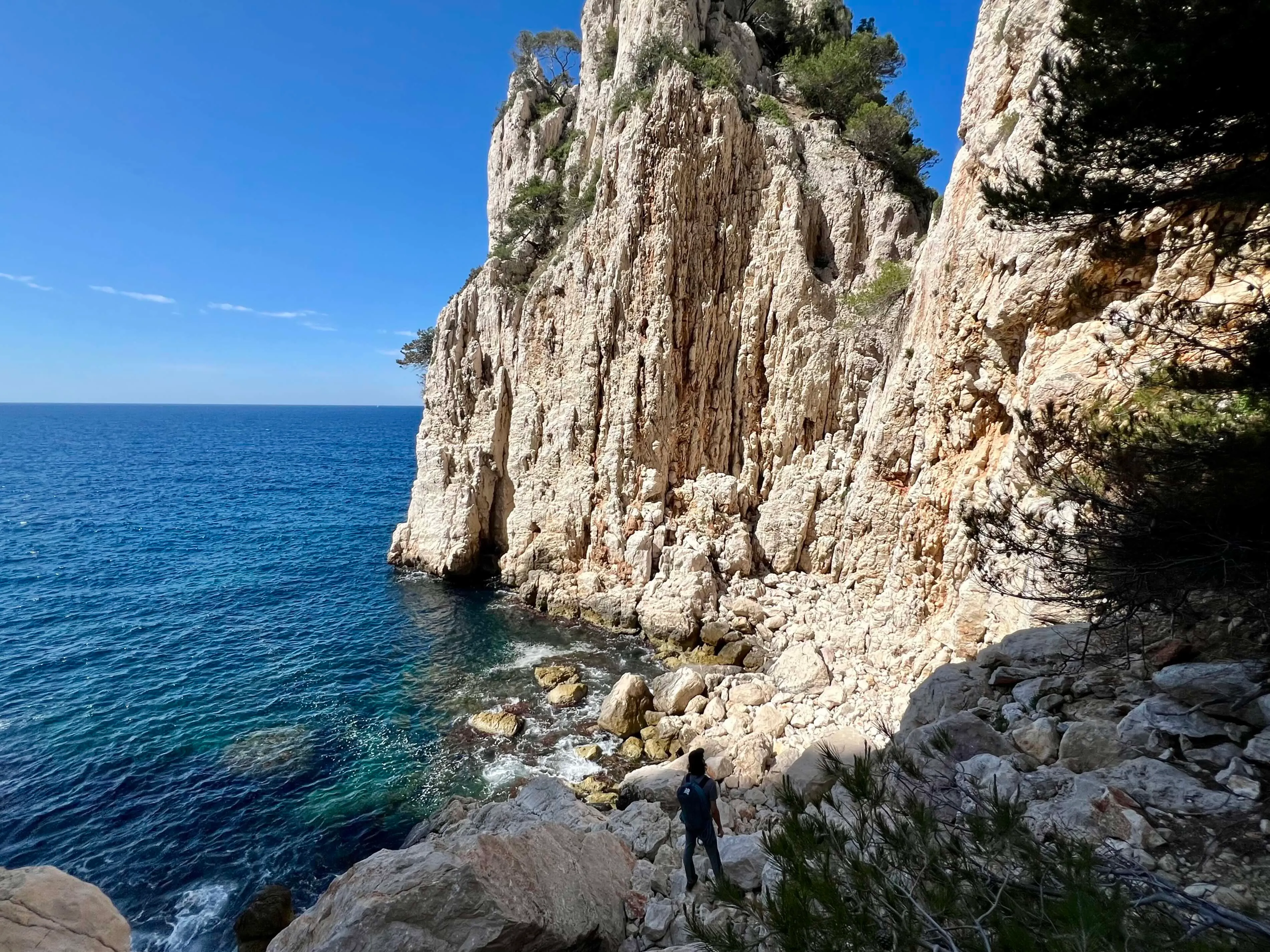
The different types of rock found throughout the massif are one of the park’s great geological treasures.
The limestone can range from bright white and grey, compact rock to sandy formations reminiscent of the Dolomites. Its landscape was shaped over several stages, with successive ice ages lowering sea levels around one million years ago.
Around Cap Canaille, limestone gives way to red sandstone and puddingstone. This younger, more recent formation was built up over several layers of different types of rock.

All the Calanques guidebooks are available in Whympr!
If you want access to guidebooks written by professional authors, you can purchase Topos Pro directly through Whympr.
And that’s perfect because the Whympr shop features the complete VTOPO climbing guidebook collection for the Calanques.
The authors have carefully selected and documented multi-pitch routes up to 6c, keeping the overall difficulty at a relatively accessible level.
Although, let’s be honest, 6c on a multi-pitch route is already pretty impressive!

.webp)