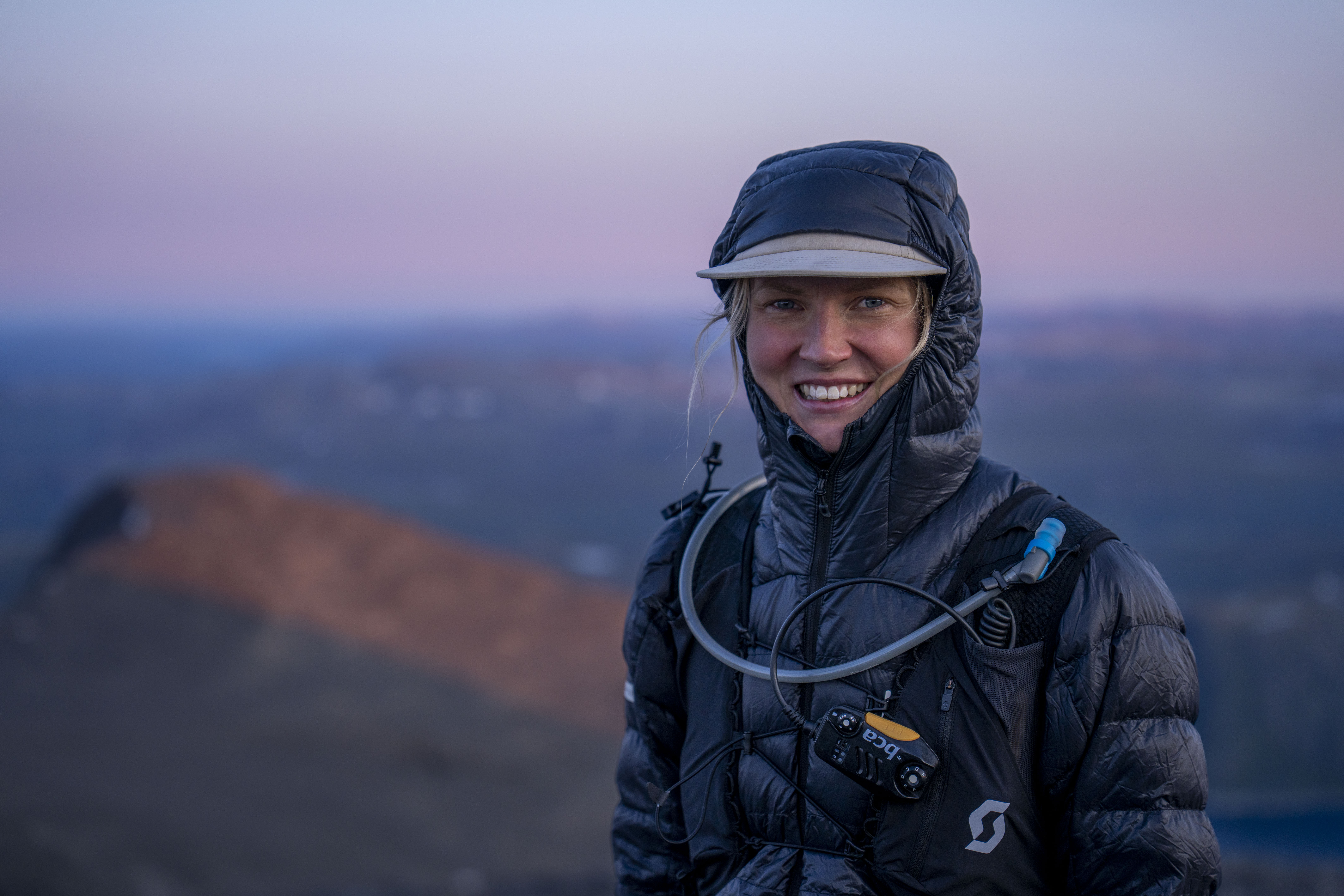
Jotunheimen, in Norway, has more than 250 peaks above 1,900 metres, including Galdhøpiggen, the country's highest point. Henna lives 80 kilometres away. This summer, she set out to link several of these giants under her own power: cycling from one valley to the next, then running on where the road ends.The project is called Between Peaks. On paper, it was an endurance challenge. On the ground, the weather had other plans. Storms, snow on the ridges, summits out of reach. She had to head home, wait it out, then set off again differently.
What came out of it is a story that goes beyond performance. It's about what we're really looking for in the mountains, the role of huts when the weather turns, and a question we ask ourselves at Whympr too: how accessible can we make the mountains without spoiling what we come there for?
We'll let you read her story.
.jpg)
We are drawn to mountains. There’s something about them that keeps pulling us in. For decades, people have headed into the mountains to discover them, challenge themselves and, along the way, explore their own limits. With 29 of Norway’s highest peaks technically right in my backyard — just 80 kilometres from home — I’ve definitely felt that pull towards Jotunheimen.
Galdhøpiggen, at 2,469 metres, is Norway’s highest mountain, and the surrounding landscape is packed with more than 250 peaks above 1,900 metres. Glacier tongues reach down into the valleys like stretched-out fingers, while huge high plateaus connect one giant to the next. Jotunheimen means Home of the Giants. The name comes from Norse mythology, and standing among these mountains, it’s easy to see where it comes from.
I had spent some time here in winter, skiing in Hurrungane, one of Norway’s most dramatic high-mountain areas, but I had never really explored the rest of Jotunheimen — and I had never visited it in summer. For a while, I debated whether I should bike around it or trail run through it. Eventually, I thought: why not combine both? I wanted to explore all sides of it.
That became Between Peaks.
.jpg)
The idea was simple: link some of Jotunheimen’s high peaks under my own power, cycling between the mountains and continuing on foot when the roads ended. I wanted to make the journey between the peaks part of the adventure.
On paper, it was an endurance project — a test of planning, navigation and sustained effort. But the physical challenge was not the only reason I chose Jotunheimen. This is a protected landscape. A little over a hundred years ago, reaching Jotunheimen was a significant undertaking that could take days of travel. Today, the mountains are more accessible than ever. Roads reach deep into the surrounding valleys, and an extensive network of trails and mountain huts makes it possible to travel through the landscape for days.
Accessibility has opened these mountains to more people, allowing more of us to experience and appreciate them. But it also raises a question: how do we know when a place has become too accessible? Is there a point where making it easier to visit begins to change the very qualities that draw us there in the first place?
The mountain itself won’t tell us. Yet perhaps there are signs. Wild reindeer, for example, have already retreated from some areas as human activity has increased. Increased access can bring more visitors and more pressure on the landscape and wildlife. At the same time, some infrastructure exists for a reason. The question is not simply whether a mountain is accessible, but what that access enables — and what it costs.
I wanted to see Jotunheimen for myself — not just reach its highest peaks, but spend enough time moving through the landscape to understand it as a whole. Could travelling between the peaks, rather than simply arriving at them, reveal something about the relationship between accessibility, adventure and the landscape itself?
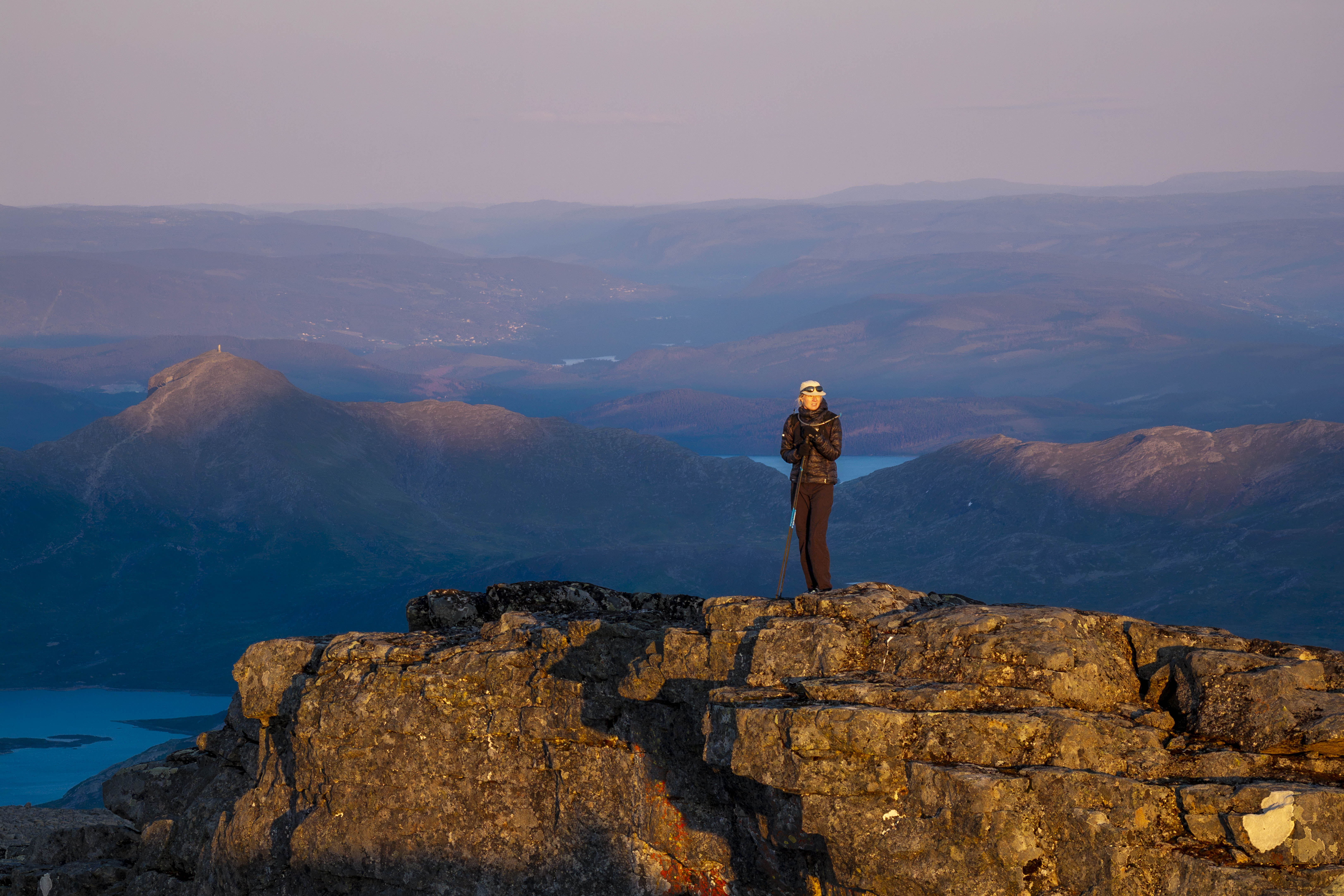
Summer on the High Plateau
“Summer on the high plateau can be delectable as honey;
it can also be a roaring scourge.
To those who love the place, both are good,
since both are part of its essential nature.”
Nan Shepherd, The Living Mountain
The first three days were definitely delectable as honey. River deltas drew intricate shapes across the valleys, sunsets coloured the mountains and glaciers, and from up high, I understood why we’re so drawn to seeing the world from above. Then the storm appeared in the forecast.
I spent the next three days moving through increasingly wild weather, including storm-force winds on the way to two of the highest peaks. And then it got worse. Clouds swallowed the summits, snow started building on the higher ridges, and several of my objectives were suddenly off the table.
.jpg)
In the mountains, there’s a fine line between being brave and being stupid brave. This time, I decided to stick to brave — and took a bus home to let the worst of the weather pass. While waiting for the weather to clear, I read Nan Shepherd’s words about the high plateau.
I was bummed. Anxious about not being able to do what I had planned, frustrated by having to stop and wait. But somehow, that quote — and the rest of her book — calmed me down. It’s funny how life, and these places, sometimes bring you exactly what you need at exactly the right time.
Somewhere along the way, I had got pulled into seeing the mountains mainly as their peaks — as objectives to tick off, numbers to count, and a kind of sporting arena. The higher the summit, the better the view; the more peaks, the better the day. There’s something addictive about standing high above everything, and I had started chasing that feeling.
In doing so, I had almost forgotten why I came here in the first place.
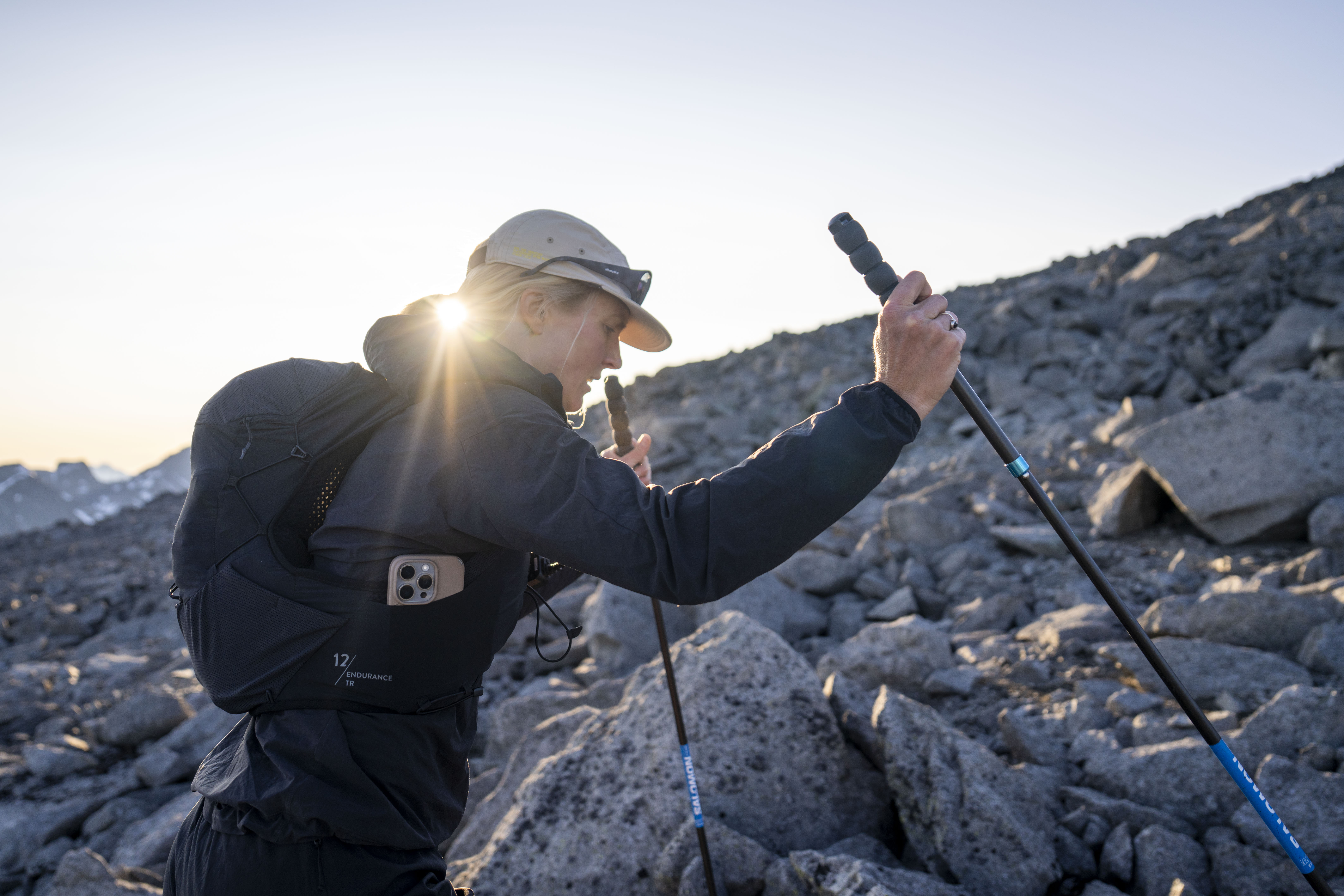
I didn’t come to Jotunheimen simply to climb its highest peaks. I came to experience the landscape, to understand it by moving through it — to see what lies between the giants, not just stand on top of them. Maybe travelling between the peaks could tell me something that reaching them never could. When I went back to Jotunheimen, I got one spectacular day in the high mountains before the clouds rolled back in. But this time, it didn’t matter as much. I had made myself a Plan B.
Instead of focusing only on the peaks, I ran deeper into the valleys, from one hut to another, and started paying more attention to everything between them. The weather also made me look differently at the mountain huts scattered throughout Jotunheimen. I had thought of them mostly as part of the infrastructure that makes these mountains accessible. But after being caught out in rapidly changing weather, I started to understand why they have been here for generations.
They are not simply places that make the mountains more comfortable or convenient. They provide shelter when conditions change and make it possible to keep moving through these mountains when the weather turns. In a landscape where a sunny morning can become a snowstorm by afternoon, that kind of access can be the difference between being able to continue and having to turn around.
.jpg)
But the experience also made me realise that accessibility is not a simple question of more or less. Some forms of access can help us move through a landscape with greater safety and awareness. Others can concentrate people in places that are less able to absorb them. The challenge is understanding where that line lies — and who is responsible for making sure we don’t cross it.
The “in-between” had been the part of the journey connecting one objective to the next. Now, it became part of the objective itself. And maybe that is one of the greatest values of places like Jotunheimen — not only what we can accomplish within them, but how they can change the way we see. I started this journey looking towards the highest points. I left thinking much more about everything between them.
.png)

.png)
%20(1).jpg)